
Spurs Notes: Game 4 Reaction, Wembanyama, Fox
The first step for the Spurs in preparing for Game 5 is to shake off the memories from Wednesday night’s collapse, which led to one of the most shocking losses in NBA Finals history. After letting a 29-point lead slip away and falling in the final seconds due to missed free throws and poor decision making, the team has time to refocus before the series resumes Saturday night in San Antonio.
The Spurs’ locker room was subdued following Game 4 as players tried to process what just happened, according to Marc J. Spears of Andscape. While most of them sat quietly at their lockers when the media entered, Keldon Johnson tried to provide some hope regarding the challenge of overcoming a 3-1 deficit.
“It’s a tough one, a tough pill to swallow,” he said. “I feel like we got comfortable, and things happen. But I think the main thing is that belief is there. We believe. Our belief is as high as ever. You don’t get here without belief, without faith in each other, and that’s not going to change now. If it was easy, everybody would do it.”
Coach Mitch Johnson also attempted to remain positive as he held his post-game press conference just a few feet away from jubilant Knicks fans. Johnson told his players to deal with the emotions of the loss and then get ready to compete on Saturday.
“We have two days to put everything we have into that game. That’s the only game that matters,” he said. “By no means am I not acknowledging the Knicks and what they’ve done. Give them credit for playing good basketball. But we feel like we’ve decided the outcome of all four games. We need to be better in the next game.”
There’s more on the Spurs:
- Victor Wembanyama will receive an automatic one-game suspension if he’s assessed another flagrant foul, but he doesn’t plan to change his approach going into Game 5, Tom Orsborn of The San Antonio Express-News states in a subscriber-only story. The flagrant 1 Wembanyama received in the third quarter on Wednesday for elbowing Karl-Anthony Towns in the chin brought him to three flagrant points in the postseason, just one away from triggering the suspension. “Of course, I’m going to be more careful, but it’s not going to change much,” Wembanyama said.
- De’Aaron Fox made a huge miscalculation by attempting a layup after a steal with 11 seconds remaining, but he doesn’t deserve the blame he’s been getting for the loss, contends Melissa Rohlin of The California Post. Fox’s shot was blocked by OG Anunoby, giving possession back to the Knicks and setting the stage for Anunoby’s game-winning tip-in. While Fox could have dribbled out some time and given his team a three-point lead at the foul line, that wouldn’t have guaranteed a victory. Rohlin points out that the Spurs were outscored 32-16 in the fourth quarter, so everyone played a role in the collapse.
- Paul Garcia of The Spot Up Shot examines the Spurs’ Game 4 breakdown and tries to figure out why the offense stopped working in the second half.
Nets Expected To Offer Max Deal To Austin Reaves
The Nets are expected to make a full max offer to Lakers shooting guard Austin Reaves in free agency, multiple front office sources tell Dan Woike of The Athletic.
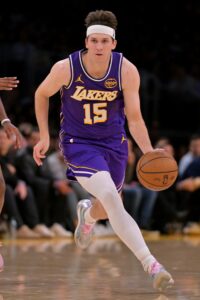 Woike also hears from league sources that the Pistons and Hawks are part of a group of interested teams with the ability to create cap space and get involved in the bidding for Reaves. He adds that other teams could emerge as free agency draws closer.
Based on the NBA’s latest salary cap estimate, a five-year, maximum-salary deal for Reaves with the Lakers would be worth a projected $239.3MM, while a four-year max deal with another team would be valued at $177.4MM.
Woike notes that the Lakers have an exclusive window to negotiate a new deal with Reaves, starting on the day after the NBA Finals conclude and running through the start of free agency on June 30. Reaves has a relatively small cap hold at $20.9MM, so Woike states that L.A. would like to reach an agreement with him during that time, then delay the formal contract signing until other offseason moves are complete.
Reaves turned out to be a major bargain on the four-year, $53.8MM deal he signed with the Lakers in 2023. That included a $14.9MM player option for next season, which Reaves is certain to decline by the June 29 deadline.
Although he was hampered by injuries, Reaves still managed to put together a productive season in 2025/26, averaging a career-high 23.3 points in 51 games, along with 4.7 rebounds and 5.5 assists in 34.5 minutes per night. He suffered a Grade 2 left oblique strain in early April that affected his availability for the playoffs, and he shot just 40.7% from the field and 25.7% from three-point range in six games once he returned.
Reaves prefers to remain with the Lakers, according to Woike. He has developed a strong relationship with Luka Doncic and LeBron James as well as coach JJ Redick and enjoys the lifestyle that he has in L.A. However, Woike states that money is likely to be a very strong factor in the final decision, as Reaves has been undervalued throughout his career.
From the Lakers’ standpoint, they don’t want to lose one of their most valuable assets as Reaves provides a secondary play-maker alongside Doncic while being capable of creating his own shots. A team source told Woike that defensive concerns about lineups with Doncic and Reaves are overstated, and that Reaves has emerged as a strong locker room leader.
Woike adds that the Lakers might be in position to be more frugal in their negotiations with Reaves if the market were different, but they understand there will be a strong demand around the league if he’s permitted to reach free agency.
Latest On Giannis Antetokounmpo
The Bucks are seeking clarity regarding what several teams are willing to offer for Giannis Antetokounmpo before reaching a final decision on a trade, league and team sources tell Sam Amick and Eric Nehm of The Athletic.
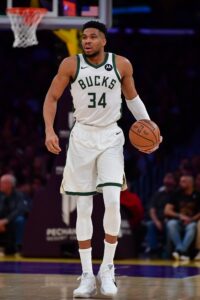 The Celtics, Timberwolves and Magic are among the teams involved in negotiations, according to the authors’ sources. The Trail Blazers have also expressed interest in acquiring Antetokounmpo, but Milwaukee seems to prefer using Portland as a third team to help facilitate a deal and reclaiming some of the draft picks it sent away in the 2023 Damian Lillard trade.
The Heat, who made an aggressive pitch for Antetokounmpo prior to the trade deadline, are still viewed as the frontrunners across the league, according to Amick and Nehm. Many sources expected a deal with Miami to be completed in February before the Bucks pulled out, and the current package is expected to include Tyler Herro, Kel’el Ware, Jaime Jaquez Jr., either Pelle Larsson or Kasparas Jakucionis and draft assets that could involve up to three first-round picks. The authors note that Herro unfollowed the Heat on Instagram this week, creating speculation that a deal was about to get done.
Sources who spoke to Amick and Nehm cited “a sense of distrust” from some teams lingering from the way Milwaukee conducted trade discussions leading up to the deadline. It was the first time that general manager Jon Horst actually welcomed league-wide offers for Antetokounmpo, and the team seemed willing to make a deal. However, skepticism mounted about the Bucks’ “level of sincerity” as the deadline drew close, and the two-time MVP ultimately wasn’t moved.
Amick and Nehm cite the Celtics as posing “a serious threat” to Miami’s pursuit of Antetokounmpo, as league sources tell them that he would be willing to commit to a four-year, $275MM extension with Boston. Jaylen Brown would likely be headed out in that scenario, with the Bucks expected to flip him elsewhere in exchange for younger players and draft picks if it winds up being a two-team deal.
Amick and Nehm describe the Wolves as “an emerging option” for Antetokounmpo. It’s been repeatedly stated that he prefers to stay in the Eastern Conference, but league sources tell the authors that the Bucks are interested in what Minnesota could offer. They hear that Milwaukee would want Jaden McDaniels, Naz Reid, Terrence Shannon Jr. and the team’s two tradable first-round picks (No. 29 this year and their 2033 selection). However, the Wolves consider McDaniels off limits, according to Amick and Nehm, along with young center Joan Beringer. It’s also not certain, they add, that Antetokounmpo would sign an extension with Minnesota.
Sources tell Amick and Nehm that some teams are asking the Bucks to present them with offers that they would consider acceptable, rather than going back and forth with proposals. The hope is not only to get clarity from Milwaukee’s side, but to minimize the number of players whose names get leaked to the media. Bucks co-owner Jimmy Haslam indicated last month that the team hopes to resolve Antetokounmpo’s future by the start of the draft, so that leaves 11 more days for the machinations of a deal to play out.
And-Ones: Teams To Watch, Haugh, Thomas, Korkmaz
While the NBA Finals are reaching their dramatic conclusion, teams around the league are preparing for what comes next. The 2026 offseason has the potential to be an exciting one, according to ESPN’s Tim Bontemps and Bobby Marks, who break down 10 teams that could define the summer.
The Celtics will be a team to watch as they look to continue building a contender around a healthy Jayson Tatum. Boston lacks the bigger-dollar contracts needed to bring in top-tier players unless the front office decides to move one of Jaylen Brown or Derrick White. The Celtics will also have to decide if they want to decline Neemias Queta‘s team option and sign him to a long-term deal or pick up the option and figure out his contract by next summer.
The Cavaliers have decisions to make on their high-scoring backcourt, as Donovan Mitchell is extension-eligible and James Harden is up for a new deal at 36 years old. The Pistons, meanwhile, have the choice between continuing to build slowly and steadily or taking a big swing.
The Clippers, Lakers, Bucks, Nuggets, Wolves, Heat, and Thunder round out the rest of the teams that ESPN’s duo believes will help shape the outlook of the offseason.
We have more news and notes from around the basketball world:
- Thomas Haugh was one of the higher-profile prospects to withdraw from this year’s draft class, having opted to go back to Florida. His decision was influenced by new NIL money, though he also appreciates the stability of one more year in college before he embraces the chaos of the NBA lifestyle, according to Mark Long of The Associated Press. “The NBA life is no joke,” Haugh said. “I think my mom didn’t really realize that until she talked to [Grizzlies guard Walter Clayton Jr,‘s] mom a little bit. Like, you can get traded any day of the week. You’re not out there getting dinners with your guys every night or going on fun trips and stuff like that. It’s a job.” He’s hoping that his return will allow the Gators to compete for another national championship.
- After leading Paris Basketball to its third straight Finals in France’s domestic league, German coach Julius Thomas has drawn interest from several NBA teams looking to add to their coaching staffs, Kevin Martorano writes for Sportando, citing a BeBasket report. While there are no specific teams listed, multiple clubs have reportedly approached Thomas with an eye towards next season.
- Former Sixers wing Furkan Korkmaz has reached a deal with Besiktas in his home country of Turkiye, Bugra Uzar reports for Eurohoops. Besiktas’s future is uncertain, as it has a chance to be promoted to the EuroLeague or stay in the BTK EuroCup. Korkmaz helped lead Turkiye to the silver medal in the 2025 EuroBasket tournament and is coming off a season with Tofas in the Turkish league, where he averaged 9.0 points in 19.7 minutes per game. He appeared in 328 NBA regular season games from 2017-24.
Atlantic Notes: Gansey, Grimes, Raptors, Nets
The Sixers recently introduced their new president of basketball operations, Mike Gansey. Now it’s time for him to start answering some of the difficult questions Philadelphia’s roster situation presents, Tony Jones writes for The Athletic.
The two factors that will complicate Gansey’s ability to put his stamp on the roster are the futures of Paul George and Joel Embiid. Both veterans had moments of high-level play this season, but they also have extremely expensive contracts and lengthy injury histories. Since it’s unlikely the Sixers will be able to find palatable avenues to trade them, it’s imperative that they try to find ways to keep both veteran stars on the floor as much as possible.
The non-taxpayer mid-level exception could be an important tool in Philadelphia’s search for an impact player to help take the team from good to very good, Jones notes. The 76ers also have the 22nd pick in the draft, which Gansey is in a good position to be able to maximize the value of, given his time running the draft in Cleveland, according to Gina Mizell of The Philadelphia Inquirer.
“At 22, you want to get a combination of best player available and fit with our roster,” Gansey said about his approach to the draft.
We have more from the Atlantic Division:
- The Sixers will also have to figure out what to do with unrestricted free agent Quentin Grimes, who is coming off an unspectacular second season in Philadelphia. Even after trading away Jared McCain, there’s an argument to be made that Kelly Oubre Jr. should be the incumbent player the team looks to retain, Adam Aaronson writes for the Philly Voice, especially because Grimes could have a wider range of teams interested in him given his age and shooting. Aaronson speculates that the Bulls, Clippers, and Bucks could be suitors for the 26-year-old’s services.
- The Raptors have had to watch two players they traded away come through the East to reach the NBA Finals in consecutive years in OG Anunoby and Pascal Siakam. The team probably mishandled the Siakam trade in particular, but it seems unlikely that keeping him in Toronto would have worked in the long run anyway, Eric Koreen writes for The Athletic. When it comes to next steps, Koreen says it would behoove the Raptors not to sign any more long-term contracts as the team try to figure out how to improve the roster, which is surprisingly expensive given the lucrative deals that Brandon Ingram, Jakob Poeltl, and Immanuel Quickley received. Toronto shouldn’t be desperate to move Ingram or Quickley, but the front office does need to be careful with how it gives out money moving forward.
- The Nets are only three-and-a-half years removed from the Kevin Durant and Kyrie Irving experience, but their rebuild in recent years hasn’t quite gone according to plan, due in part to a lack of lottery luck. They will have to figure out how to start building a competitive roster this offseason, since the Rockets own their pick next summer, Yossi Gozlan writes in his offseason preview for The Third Apron (Substack link). They could look to renegotiate and extend Michael Porter Jr., who had a strong first season in Brooklyn. They could also use their stockpile of draft picks and young players to try to move up in the draft from No. 6. Additionally, they’re on the clock when it comes to reserve center Day’Ron Sharpe, who has been productive off the bench for several years.
Chauncey Billups Appears In Court For Status Update Hearing
While the Trail Blazers are moving forward with their head coaching search, former coach Chauncey Billups is seeking an end to his legal troubles.
Billups appeared in court on Thursday, along with 30 co-defendants, to attend a scheduled status update hearing for the federal gambling investigation he was arrested in conjunction with, Sean Highkin reports for the Rose Garden Report (subscriber link).
Billups has maintained his innocence, which his lawyer, Mark Mukasey, confirmed when asked by a reporter heading into the courthouse. Mukasey also told the judge, Ramon Reyes, that he and his client “loved” the proposed start date of November 2 for the trial. As Highkin writes, that’s a strong signal that Billups is not looking to accept a plea deal and will instead continue to try to fight to clear his name.
Former NBA player and coach Damon Jones, one of Billups’ co-defendants, pleaded guilty to his charges in April after initially pleading not guilty, saying, “I knew these games were rigged and that players were being cheated.”
A Blazers spokesperson declined to provide Highkin with a comment on Thursday and said the team wouldn’t discuss the situation while the case remains open.
Billups’ ongoing case makes it unclear whether the next coach the Blazers hire will be an acting head coach or the club’s permanent head coach. Highkin notes that should Billups plead – or be found – guilty, the team would have grounds to fire him for cause and void his contract. However, the team could face a challenge from the National Basketball Coaches’ Association if they try to void his contract and he’s eventually acquitted.
Assuming he doesn’t accept a plea deal, the uncertainty around his case could cause his contractual situation to linger over the team for months, if not years, despite it appearing incredibly unlikely that Billups ever coaches in the NBA again.
OG Anunoby Has Played Himself Into Finals MVP Conversation
Several heroes have stepped up for the Knicks during the first four games of the 2026 NBA Finals. Karl-Anthony Towns‘ two-way impact has been crucial, especially in the Knicks’ back-to-back wins in San Antonio to open the series, while Jalen Brunson has hit a multitude of clutch shots, despite not always having the most efficient shooting performances.
On Wednesday, OG Anunoby added his name to the list in dramatic fashion, getting a crucial block on Spurs guard De’Aaron Fox before getting his hand on a massive offensive rebound and tipping it in for the game-winning shot with 1.2 seconds left to play.
It was a fitting cap to the largest comeback in Finals history, Marcus Thompson II writes for The Athletic, showing all the things that make Anunoby, and this Knicks team, special: the hustle, the instincts, the never-say-die attitude.
“OG is someone who brings it every night,” Brunson said. “His work ethic, since the moment I’ve been teammates with him and seen him, has grown. His confidence has grown just because of his work ethic. Everything that I’ve seen, he’s gotten exponentially better at. So regardless of what the outside world thinks of him, we know what we have in our locker room, and we have a superstar in that locker room.”
Anunoby’s contributions weren’t just limited to the last-minute heroics, though. With the Spurs taking a dominant lead in the first half, the series seemed to be slipping away from the Knicks, after they had built a 2-0 lead out of the gates. Anunoby responded, building on his 28-point Game 3 performance. He hit three after three, drove into the paint, and switched onto Fox in the second half, causing problems for the Spurs’ pick-and-roll attack.
“He does everything,” Landry Shamet said. “He’s a virtuoso.”
The performance wasn’t surprising to those who know the star of few words well. Neither was how he exploded towards the basket to get the offensive rebound. In fact, that was something he worked on throughout his time in college, according to Tom Crean, his former coach at Indiana University, who says Anunoby has always been hungry to know what it will take for him to reach the next level.
“Most of the time as a coach, you’re selling a vision for them, and they may even want it, but they don’t have any idea about the reality of it,” Cream writes. “OG wanted to learn what the reality would be like if this were to happen.”
The Finals are far from over, as both teams will now travel back to San Antonio for a critical Game 5, with the Knicks holding a 3-1 edge If the Knicks are able to complete their run and win the championship though, there’s little doubt that Anunoby has made a strong case for himself to be firmly in the Finals MVP discussion, Brian Mahoney writes for The Associated Press.
He might not always be heralded for his scoring, but what the Knicks have seen from him, especially in the last two games, is far from a surprise. Anunoby has been red hot throughout the playoffs and is the team’s second-leading scorer in the postseason at 20.7 points per game. He is shooting 57.8% from the field, 50.6% from three, and 86.7% from the free-throw line in his 16 playoff outings.
A hamstring injury derailed his momentum temporarily in the middle rounds of the playoffs, but he seems to have found his rhythm again at the time the Knicks needed him most.
“He’s been amazing since he’s got here,” Josh Hart said. “This whole playoff run, he’s been amazing on both ends of the ball. He’s a winning player and he made a winning play.”
Draft Notes: Acuff, Wagner, Kayil, Lewis
As the world watches the Knicks fight for their first championship since 1973, projected 2026 top-10 pick Darius Acuff is taking notes and hoping to show teams that he could have a similar impact to New York’s star point guard, Jalen Brunson, Myron Medcalf writes in an in-depth player profile for ESPN.
Acuff grew up watching small, tough guards like Allen Iverson and Stephon Marbury, a list to which Brunson has definitively been added and which Acuff dreams of joining himself.
“We feel like we can go out there and play against anybody,” Acuff said of the similarities in mentality between himself and Brunson. “I feel like I can hopefully do the same thing one day and it’s definitely inspiring to see.”
While it’s difficult to overindex on the success of stars that break the conventional mold, such as Brunson, Acuff is not alone in the belief that he can capitalize on what could be a convincing argument that teams can, in fact, win with a small guard leading the way.
“I think Acuff can open some eyes in the NBA,” a Western Conference scout told Medcalf. “Brunson has kind of brought back the smaller, scoring, tough physical point guard that can lead a team. And Acuff has some of those traits. He might even have a little more.”
The 2026 draft lottery is loaded with position-locked point guards, so Acuff is not the only one hoping to buck the league’s recent trend of phasing out smaller guards.
We have more notes from the 2026 Draft:
- Keaton Wagler, a talented guard out of Illinois, will work out for the Kings next week, Kevin O’Connor reports for Yahoo Sports in his latest mock draft. The Clippers, who have been frequently linked to Wagler with the fifth overall pick, aren’t necessarily as enamored with the sweet-shooting 19-year-old as widely speculated, O’Connor adds, and he recently cancelled a workout with the Nets, though it’s unclear if that was due to scheduling conflicts or something more indicative of how Brooklyn is leaning with the sixth pick.
- German guard Jack Kayil is one of the few prospects in the draft still playing — he scored 10 points in a dominant win on Tuesday to help ALBA Berlin advance to the German Bundesliga Finals, where they will face off against Bayern Munich. Kayil, a 6’5″ combo guard, scored 12.3 points in 21.3 minutes per game this season and displayed some interesting shooting range, despite having an inefficient year. He’s currently 37th on Jeremy Woo’s big board for ESPN.
- Malique Lewis has been cleared to play in the NBA by the league’s fitness-to-play panel, Jonathan Givony reports for DraftExpress (via Twitter). This is a crucial development for the 6’8″ 21-year-old, who was unable to take part in the G League combine due to a preexisting heart condition, which had been known and documented for several years. Lewis was impressive at the adidas EuroCamp in early June, showing his passing, rebounding, and shooting ability, Givony notes. Lewis averaged 7.1 points, 4.3 rebounds, 2.2 assists, and 1.2 steals in 21.3 minutes a night for South East Melbourne this season while posting an impressive .455/.387/.800 shooting line. He’s 67th on Woo’s big board.
Warriors Notes: LeBron, Draft, Lendeborg, Burries
While the idea of LeBron James leaving Los Angeles to play for the Warriors still seems like a long shot, it’s a rumor that won’t die until James commits to another team or someone goes on the record to kill it, Monte Poole writes for NBC Sports Bay Area. Reporting from ESPN and The Stein Line earlier this week suggested that Golden State may be the best outside threat to lure James away from the Lakers.
“I know it seems crazy,” a well-connected league source told Poole. “But there is at least curiosity on both sides. This wouldn’t even be a conversation five or six years ago, and it might not happen now, but there’s enough there that we shouldn’t ignore the possibility. It’s mostly up to LeBron.”
The Warriors would have to make significant roster changes or convince the Lakers to accommodate a sign-and-trade in order to offer more than the non-taxpayer mid-level exception, which is projected to be worth about $15MM.
Here’s more out of Golden State:
- In a separate story for NBC Sports Bay Area, Poole argues that it would be in the Warriors’ best long-term interests to find a way to turn this year’s No. 11 overall pick into multiple first-rounders by trading down.
- Following up on the news that Yaxel Lendeborg is among the players visiting the Warriors on Thursday, Anthony Slater of ESPN suggests the Michigan star will have an individual workout and in-person meeting with the front office rather than being part of a group workout. Slater’s sources say that Lendeborg has “several fans” in Golden State’s front office.
- Lendeborg certainly won’t be the only potential lottery target who works out for the Warriors. According to Slater, Arizona’s Brayden Burries is expected to be among the prospects who visits the team next week.
Spurs Notes: Game 4 Collapse, Fox, Wembanyama
On the heels of the worst collapse in NBA Finals history, the Spurs were left looking for answers during their post-game media session following Wednesday’s Game 4 loss, per Michael C. Wright of ESPN and Joe Vardon of The Athletic. San Antonio held a 29-point lead in the third quarter, but they were outscored by 30 points the rest of the way as they shot just 8-of-39 from the floor in the second half.
The Spurs looked dominant in the first quarter, setting a Finals record by knocking down 14 three-pointers and building a 76-49 lead going into halftime. After registering 18 assists and just two turnovers in the first two quarters, San Antonio had six assists and committed nine turnovers in the third and fourth quarters.
“We went away from everything we were doing,” rookie guard Dylan Harper said. “In the first half, a lot of tough shots went in. Really, that was because we were playing the right way. We got away from that in the second half because of the lead. We just can’t take our foot off the gas. It’s one thing for me to sit up here and say it. It’s another for us to go out there and do it.”
Spurs star Victor Wembanyama acknowledged it was a “painful” defeat, while forward Keldon Johnson called it a “tough pill to swallow” and head coach Mitch Johnson referred to it as “disappointing to say the least.” Now facing a 3-1 deficit, Wembanyama and his teammates insisted they aren’t going to roll over and let the Knicks win the series without a fight.
“What’s going through my mind right now?” Wembanyama said. “I think it’s going to go one of two ways: a bad one and a good one. The bad one would be giving up. The good one would be getting stronger through this, getting more together. I know this is what we’re going to do.
“… We’ve proven we can surpass these difficulties. Even though we haven’t been there before, I’m convinced we’re built that way and we’re going to use the better of this. It’s going to tighten us up.”
Here’s more on the Spurs:
- De’Aaron Fox, who has battled an ankle injury in recent weeks, made a costly error in the final seconds of Game 4, attempting to make a layup with the shot clock off and his team up by one. OG Anunoby blocked the shot, regaining possession for the Knicks and setting up his game-winning tip-in. Explaining why he attempted to score following a Spurs steal instead of dribbling more time off the clock and letting the Knicks foul him, Fox said, “I thought I’d be able to outrun (Anunoby),” per Sam Amick of The Athletic. “Try to get a layup, get up three and force them to need a three,” Fox told reporters. “OG made a good block.”
- The NBA’s decision not to retroactively assess Wembanyama with a flagrant foul 1 for a shove to the back of Jalen Brunson‘s head in Game 3 looms large after the Spurs big man received a flagrant 1 in Game 4 for an elbow on Karl-Anthony Towns, notes Jared Schwartz of The New York Post. If a player accumulates four flagrant points in a postseason, he earns an automatic one-game suspension and Wembanyama is now at three points. He would’ve been unable to play in a do-or-die Game 5 if the Brunson incident had been ruled a flagrant and must avoid another flagrant foul going forward to avoid a suspension.
- Despite the fact that the Spurs held a significant lead for most of the second and third quarters, Wembanyama logged 44 minutes of action on Wednesday, his highest total of 2025/26 (regular season or playoffs) for a regulation game. Asked after the loss if he wore down as the game progressed, he replied, “Yeah, I guess I did,” according to Jeff McDonald of The San Antonio Express-News (subscription required). Johnson explained to reporters that he didn’t want to take San Antonio’s lead for granted. “With two days (off) after this, what was at stake, we wanted to win the game and try to put it away,” the Spurs’ coach said.