
Notable Free Agent Wings Still Available
We’re nearing the four-week mark of the NBA’s new league year, and most of this year’s best free agents have found new teams — or new deals with their old teams. Only four players from our list of the top 50 free agents of 2018 remain unsigned.
Still, a perusal of our list of 2018’s remaining free agents reveals several noteworthy names. Roster spots around the NBA are becoming scarce, but a number of unsigned players could help out contending teams. Some of these players could sign in the coming days or weeks, while others may have to wait for injuries to open up opportunities.
In a series of posts, we’ll be taking a closer look at some of the most notable free agents still on the board, breaking them down by position. That series started on Thursday with a breakdown of some of the top guards available, and continues today with a list of some of the most intriguing veteran wings on the open market.
Let’s dive in…
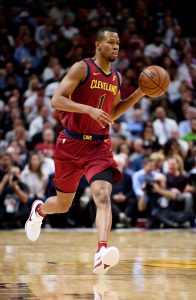 Rodney Hood (RFA): Along with Rockets big man Clint Capela, Hood is the most prominent free agent still available, with restricted free agency limiting his leverage. Only the Kings still have the cap room available to throw a lucrative offer sheet at Hood, but Sacramento seems very unlikely to do so, leaving the former Jazz first-rounder to decide between accepting whatever multiyear offer Cleveland makes or signing his $3.47MM qualifying offer. Opting for the QO would be a risk, but Hood could be in line for a larger role with the Cavs in 2018/19 now that LeBron James is gone.
- David Nwaba (UFA): After starting the month as a restricted free agent, Nwaba had his qualifying offer rescinded by the Bulls, seemingly opening up his market. However, despite being linked to the Spurs, Lakers, and Cavaliers since then, the standout perimeter defender is still without a deal.
- Nick Young (UFA): Young played regular minutes for the NBA champions in 2017/18 and shot 37.7% on three-pointers, right in line with his career average. It seems like it should just be a matter of time before he catches on with an NBA team. We heard earlier in the month that at least six clubs were said to have interest, so perhaps Young’s asking price was too high.
- Corey Brewer (UFA): After joining the Thunder, Brewer made 34.3% of his regular-season three-point attempts and 45.5% in the playoffs. If any team believes those numbers are sustainable, it would probably have already signed Brewer. Still, even if his shooting numbers regress and he doesn’t produce much on offense, Brewer can provide energy and defense for a second unit.
- Shabazz Muhammad (UFA): Muhammad claims he’s in the best shape of his life, and says he’s been working on corner threes in an effort to improve his career .319 3PT%. Potential suitors may prefer to hear that he’s working on his defense, but the 25-year-old could still have value as a volume scorer off the bench.
- Arron Afflalo (UFA): Afflalo averaged a career-low 3.4 PPG and 12.9 MPG with the Magic last season, but his .386 3PT% matched his career rate. While his days as a primary offensive option are behind him, the 11-year veteran is capable of being a decent depth piece.
- Luke Babbitt (UFA): Babbitt, a career 40.2% three-point shooter who can play either forward position, reportedly drew some interest from the Cavaliers. If an NBA deal doesn’t materialize, he should have opportunities overseas, with Barcelona and Maccabi Tel Aviv among the European teams that checked in on the veteran earlier in July.
- Pat Connaughton (UFA): The Trail Blazers decided not to tender a low-cost qualifying offer to Connaughton even after he played a regular role for the club last season, making him an unrestricted free agent. Connaughton is still just 25 years old and had a solid .423/.352/.841 shooting line in 2017/18.
- Joe Johnson (UFA): Johnson was deemed worthy of a roster spot by the team with the NBA’s best record last season, but his stint with the Rockets wasn’t particularly impressive. He shot .381/.279/.952 in 23 regular season contests, then appeared sparingly in eight playoff games. Still, he’s only one year removed from a solid season in Utah and is only 37 years old — if he follows in the footsteps of guys like Vince Carter and Manu Ginobili, he could still have a few more seasons in him.
Photo courtesy of USA Today Sports Images.
Notable Free Agent Guards Still Available
We’re nearing the four-week mark of the NBA’s new league year, and most of this year’s best free agents have found new teams — or new deals with their old teams. Only four players from our list of the top 50 free agents of 2018 remain unsigned.
Still, a perusal of our list of 2018’s remaining free agents reveals several noteworthy names. Roster spots around the NBA are becoming scarce, but a number of unsigned players could help out contending teams. Some of these players could sign in the coming days or weeks, while others may have to wait for injuries to open up opportunities.
In a series of posts, we’ll be taking a closer look at some of the most notable free agents still on the board, breaking them down by position. That series starts today with a list of some of the most intriguing veteran guards on the open market.
Let’s dive in…
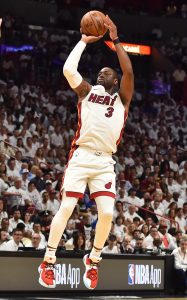 Dwyane Wade (UFA): Wade is reportedly drawing interest from teams in China, with one club said to have made him a three-year offer worth $25MM. It’s not clear whether the future Hall-of-Famer is legitimately considering a move overseas — at least one report suggesting the rumblings linking Wade to China “aren’t as serious as advertised.” Assuming he stays stateside, he’s expected to decide between a return to the Heat and retirement.
- Jamal Crawford (UFA): The veteran scorer was one of a small handful of veterans to turn down a player option this offseason, passing on a $4.54MM salary with the Timberwolves. Now, he seems unlikely to top that figure, but there should be playoff teams out there willing to give him the veteran’s minimum for a scoring punch off the bench.
- Patrick McCaw (RFA): One of three restricted free agents still available, McCaw probably won’t sign a lucrative offer sheet at this point, so it may simply be a matter of working out a new deal with the Warriors. Golden State is keeping a roster spot open for him.
- Jarrett Jack (UFA): Jack enjoyed a nice bounceback season in 2017/18 as the Knicks’ primary starting point guard. It’s possible that was the last starting job of the 34-year-old’s career, but after posting 7.5 PPG, 5.6 APG, and 3.1 RPG in 62 games for New York, he has certainly earned a shot as a backup or a third-stringer somewhere.
- Ty Lawson (UFA): After spending last season in China, Lawson returned to the NBA just in time for the playoffs and actually looked pretty good for the Wizards in their first-round loss to Toronto. He averaged 19.2 MPG for the club, averaging 5.8 PPG, 3.0 APG, and 2.6 RPG while going 5-of-8 from three-point range. So far, that hasn’t been enough to entice a team to roll the dice on him, despite some early interest from the Wizards.
- Mario Chalmers (UFA): Although Chalmers remains confident that he’ll land an NBA job at some point, there haven’t been any real reports linking him to suitors so far this month. He served as Memphis’ backup point guard for most of last season, averaging 21.5 MPG in 66 contests, but struggled with his shot (.379 FG%, .277 3PT%).
- Jason Terry (UFA): Terry spoke repeatedly throughout the 2017/18 season about wanting to play 20 NBA seasons before he retires. He’s at the 19-year mark now, which means he’s probably not ready to call it a career quite yet. Terry has made 39.5% of his three-pointers over the last two seasons with the Bucks, so he can be counted on for a little more than just his solid locker-room presence. Last year, he signed in mid-September — it’s possible that will happen again this time around.
- Jameer Nelson (UFA): Nelson was having a solid season (5.1 PPG, 3.6 APG, .410/.364/.765 shooting) for the Pelicans last season before a pair of trade-deadline deals landed him in Detroit. He only played in seven games the rest of the way and struggled in his limited minutes, but he may still have something left in the tank for a club seeking a reliable veteran to fill out its point guard depth chart.
- Tyrone Wallace (two-way RFA): Few players on two-way contracts were more effective last season than Wallace, who averaged 9.7 PPG, 3.5 RPG, and 2.4 APG in 30 games for the Clippers. The two sides couldn’t agree to a standard NBA deal at the end of the season and haven’t been able to do so this summer either. Given how many guards L.A. on its roster, the team may consider withdrawing Wallace’s two-way qualifying offer at some point to allow him to sign outright with a new club.
Some other free agent guards of note:
- Tony Allen
- Aaron Brooks
- Isaiah Canaan
- Jordan Crawford
- Malcolm Delaney
- Tim Frazier
- Shelvin Mack
- Note: Mack is believed to be close to a deal with the Grizzlies.
- Ramon Sessions
- Tyler Ulis
Photo courtesy of USA Today Sports Images.
Community Shootaround: Early Western Conference Predictions
NBA teams aren’t necessarily done reshaping their rosters for 2018/19 quite yet, but nearly all of this summer’s impact free agents are off the board. And unlike last year, when Kyrie Irving was traded in late August and Carmelo Anthony was moved in September, the majority of this year’s biggest-name trade candidates have already been dealt or seem unlikely to go anywhere at this point.
With the major offseason roster moves out of the way, we can start evaluating what the NBA playoff picture might look like next season. We’ll kick off that discussion today by examining the Western Conference, where it took 47 wins to claim a postseason berth this past spring.
The competition in the West figures to be no less fierce in 2018/19. With the possible exception of the Rockets, who lost Trevor Ariza and Luc Mbah a Moute, and the Pelicans, who lost DeMarcus Cousins and Rajon Rondo, none of the eight Western Conference teams from last year look any worse.
The Warriors are bringing back all their key pieces and added Cousins; the Trail Blazers, Timberwolves, and Jazz look almost the same as they did last year, with all their top players still under contract; the Thunder brought back all their most important free agents while adding a couple complementary pieces in Dennis Schroder and Nerlens Noel; and the Spurs replaced a star who appeared in just nine games last season with another All-Star in DeMar DeRozan.
There aren’t many clear candidates to fall out of the top eight in the West, and there are plenty of teams in the bottom seven who improved their rosters and have postseason aspirations. The Lakers‘ addition of LeBron James was the most obvious and noteworthy free agent move made by a Western lottery team, but it was hardly the only one.
The Nuggets re-signed Nikola Jokic and Will Barton while adding Isaiah Thomas, and will have a healthy Paul Millsap this year as they look to improve upon a 46-win season. The Clippers, who finished above .500, are deeper and arguably more talented than they were last season. The Mavericks made a pair of very intriguing additions in DeAndre Jordan and Luka Doncic. The Grizzlies should have Mike Conley at full health to go along with Marc Gasol and newcomers like Kyle Anderson, Jaren Jackson, and Garrett Temple.
We’ve mentioned 13 of the 15 Western Conference teams, with only the Suns and Kings perhaps not viewed as viable playoff threats. Even those clubs have plenty of promising young talent and could theoretically improve upon last season’s results — particularly the Suns, who added Deandre Ayton, Mikal Bridges, and Trevor Ariza.
What do you think? Are there any playoff locks in the West besides the Warriors and Rockets? Which of last year’s teams will fall out of the top eight? Which Western lottery teams are on track to reach the postseason next spring?
Jump into the comment section below to share your two cents and your Western Conference top eight.
How Non-Guaranteed Contract Rules Have Affected Recent Trades
As we detailed at length back in March, the NBA’s new Collective Bargaining Agreement made some changes to the trade rules related to non-guaranteed contracts.
Under the NBA’s old CBA, which was in effect through the 2016/17 season, a player’s full salary (not including unlikely incentives) was used for trade purposes, whether or not it was guaranteed. If a player had a $10MM salary with a partial guarantee of $1MM, his outgoing salary in a trade was the same as it would have been for a player who had a fully guaranteed $10MM contract.
[RELATED: Hoops Rumors Glossary: Traded Player Exception]
That’s no longer the case under the league’s new CBA, however. While contracts signed under the old agreement still operate by the old rules, contracts signed after July 1, 2017 are subject to the rules of the current CBA. And under the current CBA, only the guaranteed portion of a player’s contract counts for outgoing salary purposes in a trade, limiting the appeal of non-guaranteed salaries as trade chips.
In the example above, the player with a $10MM salary and a $1MM guarantee would now only count for $1MM for outgoing salary purposes in a trade, but the team acquiring him would still have to consider him a $10MM player.
These new rules have perhaps put a damper on the trade market for players on non-guaranteed contracts this offseason, but there have still been a handful of moves involving those players. Here’s a breakdown of this month’s trades that have featured a non-guaranteed salary, and how the new rules impacted each deal:
Bulls acquire Julyan Stone ($1,656,092 non-guaranteed salary) from Hornets in three-team trade
The Hornets also sent Timofey Mozgov to the Magic for Bismack Biyombo in this deal, and Mozgov’s salary was large enough to match Biyombo’s. As such, it didn’t matter from Charlotte’s perspective that Stone counted as $0 for outgoing salary purposes.
Stone’s inclusion in the trade allowed Chicago to acquire an incoming piece without taking on any guaranteed salary. If Stone hadn’t been a part of the deal, the Bulls would have to receive a draft pick or the NBA rights to a draft-and-stash player just to ensure that they were getting something in the deal. Chicago waived Stone shortly after acquiring him.
Thunder acquire Rodney Purvis ($1,378,242 non-guaranteed salary) from Magic
Purvis was swapped for Dakari Johnson in this deal and both players were on two-year minimum salary contracts. That meant that each team could acquire its incoming player using the minimum salary exception without having to worry about matching salaries.
Under the old rules, each club would have created a $1,378,242 traded player exception in the deal — that’s the amount of Purvis’ 2018/19 salary as well as Johnson’s. Under the new rules, however, only the Thunder could create such an exception, since Johnson’s salary was guaranteed. Purvis counted as $0 for Orlando’s outgoing salary purposes, so the Magic were unable to create a TPE as a result of the swap.
Thunder acquire Abdel Nader ($450,000 of $1,378,242 salary guaranteed) from the Celtics in exchange for Rodney Purvis ($1,378,242 non-guaranteed salary)
This is the most interesting deal of the three. Although Nader is technically earning the minimum salary, his deal runs longer than two years, meaning the Thunder couldn’t use the minimum salary exception to acquire him. They also couldn’t match salaries using Purvis, since he counted as a $0 outgoing salary.
So how did the Thunder acquire Nader? Using that traded player exception they’d just created in their deal with the Magic. Because Johnson and Nader had equal $1,378,242 salaries, Oklahoma City used up the entire trade exception just three days after it was created, making it the rare TPE to be used in full.
Meanwhile, the Celtics acquired Purvis using the minimum salary exception, but were only able to create a $450K trade exception for Nader — that’s the amount of his partial guarantee, so that was his outgoing-salary amount from Boston’s perspective.
Note: Richaun Holmes and Isaiah Whitehead, both on non-guaranteed contracts, were also involved in trades this month, but they were signed under the old CBA. As such, their contracts operated under the old rules.
How Teams Are Using 2018/19 Bi-Annual Exceptions
The bi-annual exception is one of the tools available to NBA teams who are over the cap, giving those clubs the flexibility to offer free agents more than the minimum salary. In 2018/19, the bi-annual exception is worth $3.382MM, and can be used to offer a deal worth up to about $6.933MM over two years.
However, the bi-annual exception isn’t available to every team. Clubs that go below the cap in order to use cap room lose access to the exception. Additionally, using the BAE imposes a hard cap of $129.817MM (the tax apron) on a club. So if a team has surpassed the tax apron – or wants to retain the flexibility to do so – that team can’t use the bi-annual exception.
Finally, as its name suggests, the bi-annual exception can’t be used by a team in consecutive years. In 2017/18, three teams used the BAE — the Grizzlies (Tyreke Evans), the Rockets (Tarik Black), and the Pistons (Anthony Tolliver). As such, the exception isn’t available to those clubs during the 2018/19 league year. They’ll be able to use it again next summer.
With all those factors in mind, here’s a breakdown of how teams are using – or not using – their respective bi-annual exceptions in 2018/19:
BAE Still Available:
- Charlotte Hornets
- Cleveland Cavaliers
- Los Angeles Clippers
- Minnesota Timberwolves
- Orlando Magic
- Utah Jazz
Unless a taxpaying team drastically cuts costs at some point, the seven clubs listed above are the only ones that could still use their bi-annual exception at some point during the 2018/19 season.
Four these seven teams – the Hornets, Clippers, Timberwolves, and Knicks – have already hard-capped themselves by using more than the taxpayer portion of the mid-level exception, so they could theoretically use their BAEs without worrying about further restrictions. The Cavaliers, Magic, and Jazz may be more reluctant to use theirs, particularly since they all have significant portions of the MLE still available.
BAE Unavailable:
Used:
- Milwaukee Bucks
- Used: $3,382,000 (Brook Lopez)
- Available: $0
- New Orleans Pelicans
- Used: $3,000,000 (Elfrid Payton)
- Available: $382,000
- New York Knicks
- Used: $3,382,000 (Allonzo Trier)
- Available: $0
- San Antonio Spurs
- Used: $2,487,000 (Dante Cunningham)
- Available: $895,000
Went under cap:
- Atlanta Hawks
- Brooklyn Nets
- Chicago Bulls
- Dallas Mavericks
- Indiana Pacers
- Los Angeles Lakers
- Philadelphia 76ers
- Phoenix Suns
- Sacramento Kings
Over or near tax apron:
- Boston Celtics
- Denver Nuggets
- Note: The Nuggets have shed salary since being over the tax apron, but they’re ineligible to use the BAE because they used a portion of their taxpayer mid-level exception.
- Golden State Warriors
- Miami Heat
- Oklahoma City Thunder
- Portland Trail Blazers
- Toronto Raptors
- Washington Wizards
Used last year:
- Detroit Pistons
- Houston Rockets
- Memphis Grizzlies
Salary information from Bobby Marks of ESPN and Eric Pincus of Basketball Insiders was used in the creation of this post.
How Teams Are Using 2018/19 Mid-Level Exceptions
In addition to receiving nearly $102MM in cap room and being allowed to surpass that threshold in order to sign players using Bird Rights or the minimum salary exception, each NBA team also receives a mid-level exception. The value of this exception varies depending on a club’s total team salary.
A team that goes under the cap to use its available cap room, for instance, receives only a modest form of the MLE known as the room exception. An over-the-cap team receives the full mid-level exception, unless that team is also over the tax line, in which case it gets a taxpayer version of the MLE that falls in between the full MLE and the room exception. We detailed the exact values of each form of mid-level exception earlier this offseason, but here’s a quick breakdown:
- Room exception: Can be used for contracts up to two years, with a starting salary worth up to $4.449MM.
- Taxpayer mid-level exception: Can be used for contracts up to three years, with a starting salary worth up to $5.337MM.
- Full mid-level exception: Can be used for contracts up to four years, with a starting salary worth up to $8.641MM.
Now that a majority of the NBA’s teams have used up their cap space, it’s worth keeping an eye on which teams still have part or all of their mid-level exceptions available, which we’ll do in the space below. This list will be kept up to date throughout the 2018/19 league year.
Here’s where things currently stand:
Mid-Level Exception:
Boston Celtics
- Available: $5,337,000 (taxpayer)
- Used: $0
Charlotte Hornets
- Available: $2,652,536
- Used: $5,000,000 (Tony Parker); $988,464 (Devonte’ Graham)
Cleveland Cavaliers
- Available: $5,641,000
- Used: $3,000,000 (Patrick McCaw)
Denver Nuggets
- Available: $1,149,153 (taxpayer)
- Used: $2,000,000 (Torrey Craig); $1,349,383 (Monte Morris); $838,464 (Jarred Vanderbilt)
Detroit Pistons
- Available: $0
- Used: $4,075,000 (Glenn Robinson III); $838,464 (Bruce Brown); $838,464 (Khyri Thomas); $2,383,076 (Wayne Ellington)
Golden State Warriors
- Available: $0 (taxpayer)
- Used: $5,337,000 (DeMarcus Cousins)
Houston Rockets
- Available: $3,787,973 (taxpayer)
- Used: $838,464 (Isaiah Hartenstein), $596,873 (Gary Clark), $90,005 (Chris Chiozza), $23,685 (Michael Frazier)
Los Angeles Clippers
- Available: $0
- Used: $4,320,500 (Luc Mbah a Moute); $4,320,500 (Mike Scott)
Memphis Grizzlies
- Available: $0
- Used: $8,641,000 (Kyle Anderson)
Miami Heat
- Available: $5,303,841 (taxpayer)
- Used: $18,948 (Yante Maten), $9,474 (Duncan Robinson), $4,737 (Kendrick Nunn)
Milwaukee Bucks
- Available: $0
- Used: $7,000,000 (Ersan Ilyasova); $1,641,000 (Pat Connaughton)
Minnesota Timberwolves
- Available: $1,943,583
- Used: $5,750,000 (Anthony Tolliver); $838,464 (Keita Bates-Diop), $108,953 (Cameron Reynolds)
New Orleans Pelicans
- Available: $0
- Used: $8,641,000 (Julius Randle)
New York Knicks
- Available: $655,560
- Used: $6,500,000 (Mario Hezonja); $1,485,440 (Mitchell Robinson)
Oklahoma City Thunder
- Available: $4,498,536 (taxpayer)
- Used: $838,464 (Hamidou Diallo)
Orlando Magic
- Available: $6,752,536
- Used: $1,050,000 (Melvin Frazier); $838,464 (Isaiah Briscoe)
Portland Trail Blazers
- Available: $1,703,536 (taxpayer)
- Used: $2,795,000 (Seth Curry); $838,464 (Gary Trent Jr.)
San Antonio Spurs
- Available: $1,648,690
- Used: $6,153,846 (Marco Belinelli); $838,464 (Chimezie Metu)
Toronto Raptors
- Available: $5,337,000 (taxpayer)
- Used: $0
Utah Jazz
- Available: $8,641,000
- Used: $0
Washington Wizards
- Available: $0 (taxpayer)
- Used: $5,337,000 (Dwight Howard)
Room Exception:
Atlanta Hawks
- Available: $99,000
- Used: $4,350,000 (Alex Len)
Brooklyn Nets
- Available: $0
- Used: $4,449,000 (Ed Davis)
Chicago Bulls
- Available: $4,449,000
- Used: $0
Dallas Mavericks
- Available: $4,449,000
- Used: $0
Indiana Pacers
- Available: $0
- Used: $4,449,000 (Kyle O’Quinn)
Los Angeles Lakers
- Available: $949,000
- Used: $3,500,000 (Michael Beasley)
Philadelphia 76ers
- Available: $4,449,000
- Used: $0
Phoenix Suns
- Available: $3,500,000
- Used: $949,000 (De’Anthony Melton)
Sacramento Kings
- Available: $2,449,000
- Used: $2,000,000 (Corey Brewer)
Salary information from Basketball Insiders and ESPN was used in the creation of this post.
Weekly Mailbag: 7/16/18 – 7/22/18
We have an opportunity for you to hit us up with your questions in this, our weekly mailbag feature. Have a question regarding player movement, the salary cap or the NBA draft? Drop us a line at HoopsRumorsMailbag@Gmail.com.
Who do you think got the steal of the draft at the center position? The Celtics with Robert Williams or the Knicks with Mitchell Robinson, who averaged five blocks per game in the summer league? — Greg Dizon
Robinson was the clear winner in summer league and looks like the primary backup to Enes Kanter after his outstanding performance in Las Vegas. Williams, meanwhile, was sidelined by a sore left knee and didn’t see any action. Summer league can be deceiving, of course, and none of this means Robinson will be a better player than Williams, either this season or throughout his NBA career. He still needs to develop an offensive game, and he is behind schedule overall after not playing in college. However, Knicks fans need something to be excited about and the summer performance of Robinson and Kevin Knox certainly provides that.
Who should the Mavericks look at in free agency to account for the loss on the wing with the departures of Seth Curry, Doug McDermott and Yogi Ferrell, or would a trade make more sense at this point? — M.D. Jordan Sports, via Twitter
Dallas is using the last of its cap space to re-sign Dirk Nowitzki and will have just the $4.45MM room exception available, so the options are limited. Rodney Hood is probably the top wing player left on the market, but he’s a restricted free agent and the Cavaliers would happily match an offer that started at $4.45MM. David Nwaba, who is now unrestricted after the Bulls pulled their qualifying offer, could be an interesting option if he doesn’t get a better offer somewhere else. Beyond that, the free agent pool is filled with veterans such as Jamal Crawford, Corey Brewer, Nick Young, Devin Harris and Arron Afflalo, none of whom would have a long-term future with the Mavericks.
I know Chandler Parsons‘ contract is bigger, but with the right adjustments, would a Luol Deng for Parsons trade work? The Grizzlies seem like a team that could at least try using Luol on the court, and an on-point Chandler alongside LeBron James would be awesome. Then again, I’m on the fence with Parsons, I understand why Houston, Dallas and Memphis were willing to pay him, but I also understand why they regret it. — Nicolas Galipeau
The Lakers are still in the business of trying to preserve as much cap space as possible for next year’s free agent frenzy. It’s unlikely they would gamble on Parsons even without the scary injury history. Deng and Parsons benefited from the irrational contracts that were handed out in 2016 and both have become salary cap albatrosses. Deng will make $36.8MM over the next two seasons, while Parsons is due more than $49.2MM. Their salaries make them virtually untradable, even for each other. It’s much more likely that the Lakers will use the stretch provision to make Deng’s deal less of an impediment to their free agent plans.
Community Shootaround: Carmelo In Houston
Carmelo Anthony‘s path to the Rockets now seems clear after an agreement was reached this week on a three-team trade that will send him to the Hawks, who will buy him out. Once that process plays out and Anthony clears waivers, he will be free to sign with anybody, but it’s a poorly kept secret that he plans to head to Houston.
There’s a lot to be figured out about what Anthony’s role will be with the Rockets, but he didn’t exactly excel as a third option in Oklahoma City. His playing time dropped to a career-low 32.1 minutes per game last season and his scoring average fell bellow 20 PPG for the first time since he entered the NBA in 2003.
After winning 65 games and reaching the Western Conference finals, Houston suffered a couple of key personnel losses. Trevor Ariza signed with the Suns on the first night of free agency, and Luc Mbah a Moute left for the Clippers soon afterward. That’s a loss of two defensive specialists who match up very well with the Warriors, while Anthony represents a question mark on both counts.
There have been whispers that the Rockets may be considering a sixth-man spot for Anthony, with defensive-minded free agent addition James Ennis taking Ariza’s spot in the starting lineup. Chris Paul, one of Anthony’s close friends, may be able to sell him on the idea, but his response when asked about a similar role with the Thunder isn’t encouraging.
“I’m not sacrificing no bench role,” he told ESPN’s Royce Young in April. “So that’s out of the question.” (Twitter link).
Anthony brings extra firepower to a Rockets offense that is already loaded. As several observers have noted, he is most effective when playing with elite passers — as he has done on the Olympic team — and he’ll have those in Houston with Paul and James Harden. However, the move from Ariza to Anthony won’t be a seamless switch. They are very different types of players, and many writers are predicting a greater gap between the Warriors and Rockets with Anthony on board.
We want to get your prediction. Will a move to Houston bring out the best in Anthony’s game, or will he be a distraction on offense and a liability on defense? Please leave your answers in the space below.
Hoops Rumors Originals: 7/14/18 – 7/21/18
Every week, the writing team here at Hoops Rumors creates original content to complement our news feed. Here are our segments and features from the past seven days:
- In this week’s Community Shootaround post, Arthur Hill asked whether Jabari Parker will be able to revive his career in Chicago and turn the Bulls into a winner again, or if the signing is a reckless gamble on a player whose knees will always be a concern.
- Luke Adams took a look at the early maximum salary projections for the 2019/20 season.
- Luke Adams checked in on the 13 2018 NBA Draft selections who have yet to sign an NBA contract.
- In his Weekly Mailbag, Arthur Hill answered readers’ questions about the potential of rookie Trae Young, the future of Jahlil Okafor, and some potential Clippers’ re-signings.
- Luke Adams broke down the financial impact of the blockbuster trade between the Spurs and Raptors involving Kawhi Leonard and DeMar DeRozan.
- As part of our Hoops Rumors Glossary, Luke Adams wrote about Exhibit 10 Contracts.
- And finally, Luke Adams analyzed the maximum starting salary that each of the NBA’s 30 teams can offer an outside free agent right now.
Max Amount Each NBA Team Can Offer FAs
We’re nearly three weeks into the NBA offseason, and cap room around the league has dried up. Only the Kings still have substantial cap room, with more than $20MM in space still available.
However, Sacramento isn’t the only team capable of making a competitive offer to the remaining free agents. Many other clubs around the league still have various exception money available that could be put toward a free agent signing.
With the help of information from ESPN’s Bobby Marks and Basketball Insiders, we’ve listed below the maximum starting salary that each of the NBA’s 30 teams can offer an outside free agent right now. Teams can potentially offer more to their own free agents if they hold some form of Bird rights.
Because we’re listing the maximum starting salary a team has to offer, this list doesn’t necessarily take into account every one of a club’s exceptions. For instance, if a team has its $8.64MM mid-level exception and its $3.38MM bi-annual exception available, we won’t list their BAE here.
These figures could change if teams make other roster moves, and in some cases using the maximum available amount on a free agent would create a hard cap or tax-related concerns for the club.
Here’s the breakdown:
- Sacramento Kings: $20.52MM (cap room)
- Note: Kings’ cap room will be reduced slightly by their new two-year, $6.2MM deal with Yogi Ferrell.
- Cleveland Cavaliers: $8.64MM (MLE)
- Utah Jazz: $8.64MM (MLE)
- Orlando Magic: $6.75MM (MLE)
- Boston Celtics: $5.34MM (tax MLE)
- Houston Rockets: $5.34MM (tax MLE)
- Miami Heat: $5.34MM (tax MLE)
- Oklahoma City Thunder: $5.34MM (tax MLE)
- Toronto Raptors: $5.34MM (tax MLE)
- Atlanta Hawks: $4.45MM (room exception)
- Chicago Bulls: $4.45MM (room exception)
- Dallas Mavericks: $4.45MM (room exception)
- The Mavericks are reportedly using their remaining cap room (more than $4.45MM) to re-sign Dirk Nowitzki.
- Los Angeles Lakers: $4.45MM (room exception)
- Philadelphia 76ers: $4.45MM (room exception)
- Phoenix Suns: $4.45MM (room exception)
- Detroit Pistons: $3.73MM (MLE)
- Charlotte Hornets: $3.38MM (bi-annual exception)
- Los Angeles Clippers: $3.38MM (bi-annual exception)
- Minnesota Timberwolves: $3.38MM (bi-annual exception)
- New York Knicks: $3.38MM (bi-annual exception)
- San Antonio Spurs: $3.38MM (bi-annual exception)
- Denver Nuggets: $2.5MM (tax MLE)
- Portland Trail Blazers: $1.7MM (tax MLE)
- For players with five or more years of NBA experience, the minimum salary would be worth more.
- Milwaukee Bucks: $1.64MM (MLE)
- For players with five or more years of NBA experience, the minimum salary would be worth more.
- Brooklyn Nets: Minimum salary
- The Nets are reportedly using their $4.45MM to sign Ed Davis.
- Golden State Warriors: Minimum salary
- Indiana Pacers: Minimum salary
- Memphis Grizzlies: Minimum salary
- New Orleans Pelicans: Minimum salary
- Washington Wizards: Minimum salary